Our guest speaker, Dr. Jefferies (Rhett), is a world-class scholar in his field of research and a distinguished entrepreneur. This highly informative meeting will cover all aspects of a successful professional aerospace career. We are excited for you to join Rhett's talk!
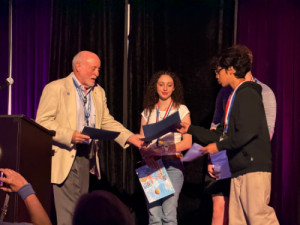
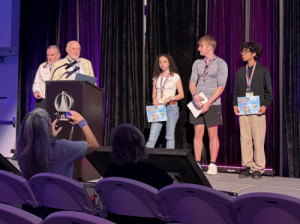
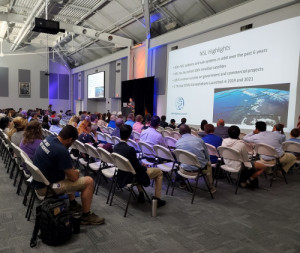
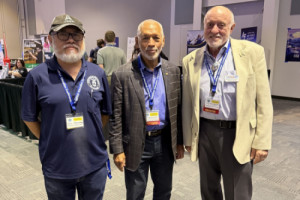
Hours are 1000-1700 Saturday, 1000-1415 Sunday at the Center for Space Education, M6-306 405 State Road, Kennedy Space Center, FL 32899. Website is: https://www.smallsateducation.org/. There will be presentations, speakers, and workshops during these hours. Saturday morning featured speaker is Dr. Norman G. Fitz-Coy, Associate professor in the M&AE Department at UF. Saturday afternoon speaker is Astronaut and Former NASA Administrator Charles Bolden.
Drinks and pizza furnished by AIAA Central Florida Section
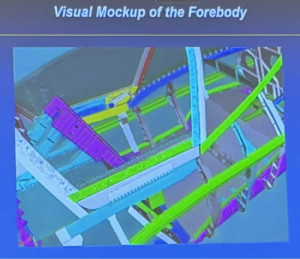
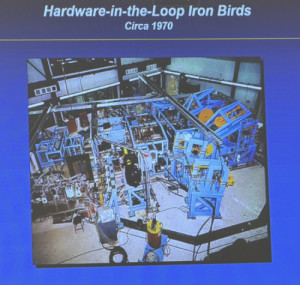
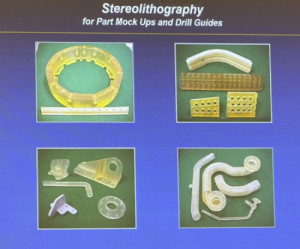
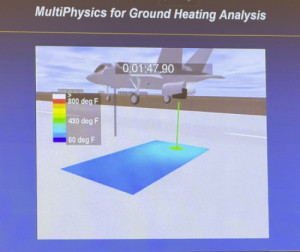
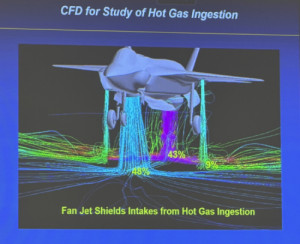
This presentation by Paul Bevilaqua, the Chief Engineer at the Lockheed Skunk Works, will describe the technical and program challenges involved in developing the F-35 Joint Strike Fighter and show how an innovative idea became an international program with engineers from half a dozen countries developing a single replacement aircraft for multiple aircraft types. The F-35 Joint Strike Fighter was developed to meet the multirole fighter requirements of the U.S. Air Force, Navy, Marine Corps, and our allies.
How will you decide the next step in your career? This 30-minute talk by Benjamin Jiminez, Digital Engineering Lead at MITRE Corporation, will provide several frameworks to think through a career in the aerospace industry while using Mr. Jimenez’s personal example to demonstrate how his aerospace engineering background impacted his journey. He’ll also discuss how AIAA has played a role in shaping his professional trajectory. Ample time will be allocated for a question-and-answer session to provide attendees with career insights to guide their own professional path.
Zoom meeting occurred of the updated local chapter Council to refine roles and plans for next year. Note that any and all chapter members were welcome to attend and contribute, not just officers and committee chairpersons.
Dr. Tom Markusic describes his personal journey from an Ohio farm to landing on the moon. He highlights incremental accomplishments and lessons learned from academics, government civil service, and the commercial sector – culminating in starting his own “newspace” companies
Junior Achievement INSPIRE
April 2 - 4, 2025 8:30AM – 2:00PM
JA Inspire is a forward-thinking, career exploration event that focuses on the development of our local youth and workforce.
This three-day event allows us to introduce us to over 15,000 8th grade students in the Orange County School District.
We set up interactive (static models of rockets/spacecrafts) and informational (promotional items like paper handouts and handicrafts) booth to teach students about potential career opportunities in aerospace engineering and theeducational paths to get there.
In this talk, Dr. Elgohary will first introduce the astrodynamics, space, and robotics laboratory (ASRL) at UCF MAE highlighting the three main research thrusts of the lab. The talk will focus on the astrodynamics research where we focus on the scientific framework for a space surveillance network for space domain awareness (SDA) applications. He will highlight three research thrusts:
(i) a novel measurement model for multi-agent observation model,
(ii) coverage optimization for the network that transcends the state-of-the-art, and
(iii) rapid quantification of uncertainty to efficiently perform SDA operations.
Since opening to the public in 1966, the Cape Canaveral Space Force Museum (formerly known as the Air Force Space and Missile Museum) has introduced millions of visitors to the history of rocketry and space flight. Facilities include a visit to Hangar C and the Cape Canaveral Lighthouse
SECME Glider Competition
Saturday, February 21, 2026 6:30am – 12:00pm
Saturday, February 21st, AIAA member volunteers were at the UCF Student Union, setting up the course, doing check-ins, measuring/judging flights, and guiding people for safety. As always, it was a fun event with competitors enjoying a mixed bag of success and learning experiences.
This 1.5-hour presentation reviewed historic earthly distinctions between exploring and pioneering before applying these distinctions to destinations in space. Although a case can be made for human and robotic exploration in space, there is as yet no compelling rationale for "putting down roots" to pioneer anywhere off Earth. Why then is the surface of Mars widely accepted as humanity's future "home away from home" to the extent some 200,000 people are willing to attempt forming a permanent colony there? There is no evidence suggesting humans can survive on the surface of Mars long-term, let alone thrive there to produce viable offspring.